Why “More Content” Is the Wrong Goal When Building a Kajabi Course
Jan 15, 2026
At the start of a new year, many course creators open Kajabi with the same intention.
Add more lessons. More videos, more modules, more downloads. It feels productive and generous, like you are increasing the value of your course. But over time, this instinct often works against both the creator and the student, because the problem most courses have is not missing content. It is missing clarity.
On the fast lane? Read the summary!
Why adding more content feels like the right move
Adding content feels logical because teaching is generous by nature. If students struggle, it is easy to assume they need more explanation, more examples, or more material to work through.
In Kajabi, this is also the most visible kind of progress. New posts appear. Modules grow. The course looks fuller. From the creator’s perspective, it feels like forward motion.
The issue is that learning does not break down because there is too little information. It breaks down when people lose their sense of direction.

The real reason students stop progressing in courses.
Students rarely disengage because a lesson is missing. They disengage because they do not know what to do next.
When someone logs into a course and sees many modules without a clear starting point or flow, they have to make decisions before they can learn. Which lesson matters most. What order makes sense. Whether they are behind. Whether they should skip ahead.
That cognitive load creates friction. Friction leads to delay. Delay turns into disengagement.
Most unfinished courses are not unfinished because the content was bad. They are unfinished because the structure did not guide the student forward.
Content and structure are not the same thing
Content is the material you teach. Structure is how that material is experienced.
Content answers questions. Structure removes questions.
Structure shows students where to begin, how to move forward, and when they are making progress. It does not restrict learning. It supports it.
A well-structured Kajabi course can contain fewer lessons and still deliver better outcomes because students are never guessing what matters most.
How structure creates guidance without limiting students
Structure is often misunderstood as rigid or controlling, but in learning environments it has the opposite effect.
Clear structure reduces anxiety. When students know what step they are on and why it matters, they feel safe continuing. They are more likely to complete lessons, apply what they learn, and return to the platform.
Structure creates momentum because it removes decision-making at moments when students are already mentally taxed.

What do students actually need from a Kajabi course?
Students do not need endless material. They need orientation.
They need to understand where to start so they are not second-guessing their entry point. They need to see progress so their effort feels meaningful rather than endless. And they need to understand where the course is taking them so each lesson feels connected to an outcome.
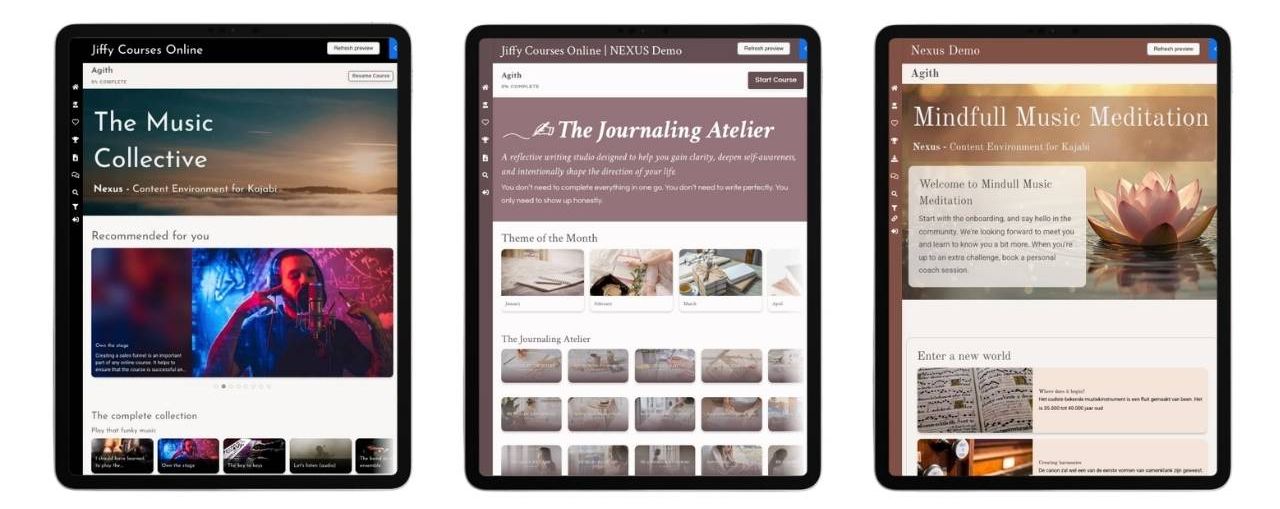
This is why structure matters at the layout level, not just in the lesson content. The way a course is organized visually and sequentially shapes how students experience learning. Jiffy Courses Online’s Kajabi templates are designed with this in mind, helping creators present content in a clear, guided way so students always know what comes next and why it matters. You can see how this approach shows up in our course and membership layouts.
When these elements are present, even a short course can feel expansive. When they are missing, even a large course can feel overwhelming.
The real goal is finishing, not adding
The goal of a course is not to contain information. It is to be completed.
Completion happens when students feel guided from one step to the next, not when they are presented with everything you know. Outcomes come from clarity, not volume.
This is where many creators quietly shift their approach. Instead of asking what else to add, they ask what can be made clearer.
Key Takeaways
- More content does not automatically create better results for students.
- Students disengage when they feel uncertain about what to do next.
- Structure provides guidance by reducing decision-making and confusion.
- Clear starting points and visible progress matter more than lesson volume.
- The success of a course is measured by completion and outcomes, not size.
A quieter way to rethink course design
Before adding another module, step back and look at your Kajabi course the way a new student would. Not as the creator who knows the path, but as someone seeing it for the first time.

Clear next step
A student should immediately understand where to begin and what to focus on next. When the next step is obvious, learning feels lighter and momentum comes naturally.

Connected story
A course works best when lessons feel connected rather than isolated. Each step should build on the last, creating a clear story from start to finish.

Visible progress
Progress matters because it reassures students that their effort is leading somewhere. Seeing what’s completed and what’s ahead keeps motivation steady.
This approach reflects how Jiffy thinks about course design. The focus is not on adding more content, but on creating better structure. Not louder teaching, but clearer learning paths. This is also why tools like Gamify Pro’s learning path feature matter.
Learning paths allow creators to guide students through content in a deliberate order, adapt progression based on completion, and make the journey feel intentional rather than overwhelming. When structure is built into the experience, students spend less time deciding what to do next and more time actually learning.

Frequently Asked Questions
Does having fewer lessons make a Kajabi course less valuable?
How do I know if my course structure is unclear?
Can I improve structure without removing content?
Is structure important for advanced learners too?